Starting yoga does not require advanced poses or hours of practice. A quiet space and 15 minutes can help you begin building a daily habit.
This daily yoga routine for beginners combines gentle movement, comfortable stretching, and relaxed breathing. You can practise it in the morning, during a break, or in the evening—choose a time that fits your day.
Before You Begin
Use a yoga mat or a stable, non-slip surface. Wear comfortable clothing and keep a sturdy chair nearby if you need support.
Move slowly and breathe naturally. You should be able to breathe comfortably throughout each pose. Reduce the movement or stop if you feel pain, dizziness, or unusual discomfort. If you have an injury, are pregnant, or have a medical condition that affects exercise, ask a qualified healthcare professional about suitable modifications before starting.
Your 15-Minute Beginner Yoga Routine
Treat the timings as a guide. There is no need to force a stretch or hold a position longer than feels comfortable.
1. Comfortable Sitting and Gentle Breathing — 2 Minutes
Sit on a folded blanket or a chair with your feet resting on the floor. Let your spine lengthen naturally and relax your shoulders.
Breathe gently through your nose if comfortable. Notice the movement of your chest and abdomen without trying to take unusually deep breaths.
Beginner tip: Choose a chair if sitting on the floor feels uncomfortable. Comfortable breathing matters more than your sitting position.
2. Gentle Shoulder Movements — 1 Minute
Stay seated or stand with your feet comfortably apart.
Slowly lift your shoulders toward your ears, then release them. Follow with a few small, gentle shoulder circles in each direction.
Keep your jaw relaxed and avoid pushing your shoulders into a large range of movement.
3. Cat–Cow Pose — 2 Minutes
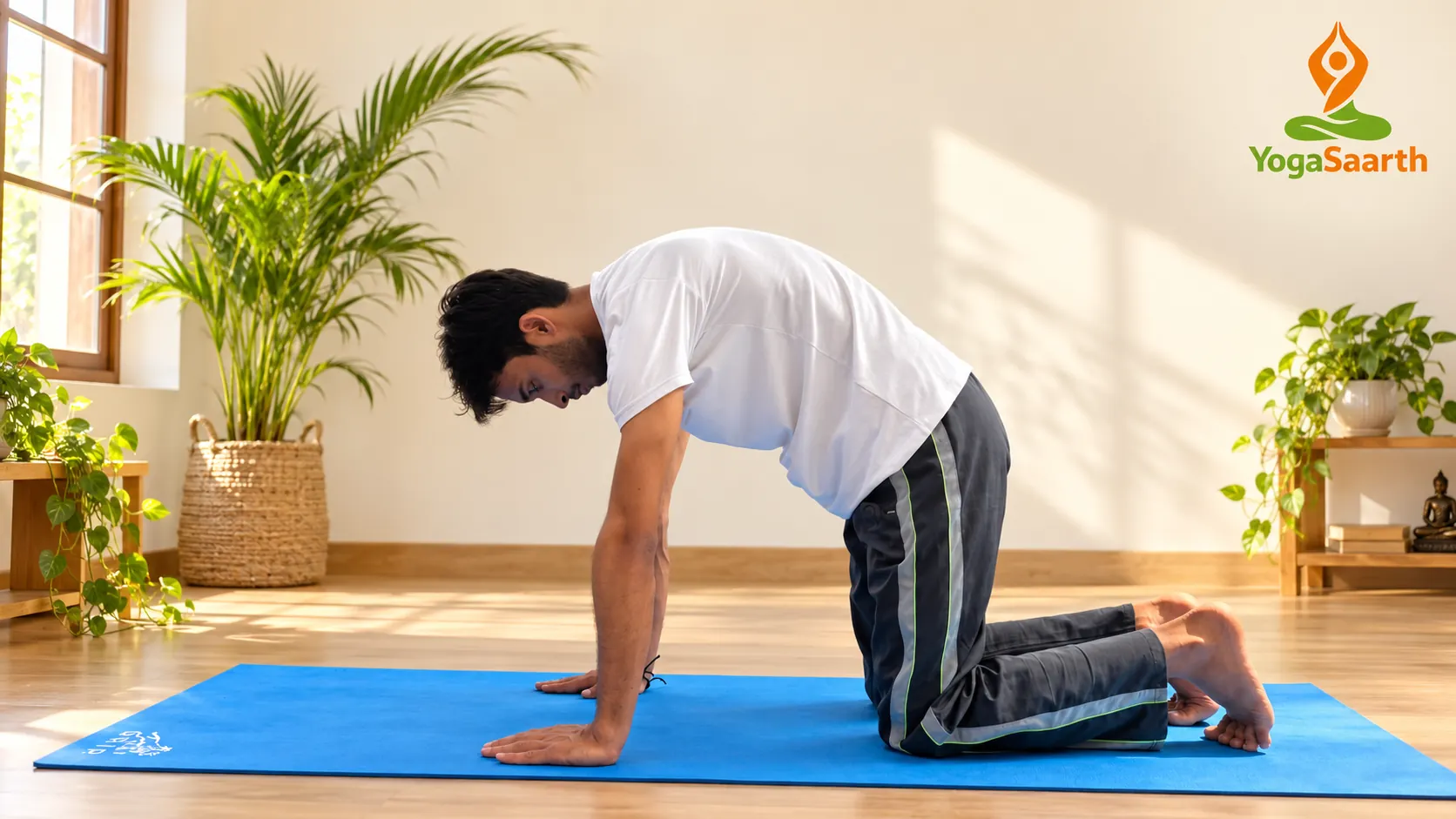
Come onto your hands and knees. Place your hands beneath your shoulders and your knees beneath your hips.
As you inhale, gently move your chest forward and allow a small curve in your back. As you exhale, slowly round your back and let your head follow the movement.
Continue at an easy pace, keeping your neck comfortable.
Easier option: Practise seated Cat–Cow on a chair. Rest your hands on your thighs and gently alternate between lifting your chest and rounding your upper back.
4. Supported Child’s Pose — 2 Minutes
From hands and knees, gently widen your knees toward the edges of your mat, only as far as feels comfortable. Slowly move your hips back toward your heels without forcing them to touch.
Rest your forehead on a cushion if it reaches easily. Let your arms rest forward or beside your body and breathe naturally.
Easier option: If this position bothers your knees, sit on a chair and lean forward slightly, resting your forearms on your thighs.
5. Mountain Pose with Gentle Arm Raises — 2 Minutes
Stand with your feet about hip-width apart and your knees soft, not locked. Distribute your weight comfortably across both feet.
As you inhale, slowly raise your arms forward or out to the sides, only as high as feels comfortable. As you exhale, lower them.
Repeat gently, keeping your shoulders relaxed and avoiding an exaggerated arch in your lower back.
Beginner tip: Keep your arms below shoulder height if lifting them higher causes discomfort.
6. Supported Standing Side Stretch — 2 Minutes
Stand beside a sturdy chair and rest one hand on it for balance.
Raise your other arm as comfortably as you can, then make a small sideways bend toward the chair. Keep facing forward and avoid twisting or leaning backward.
Return upright and repeat on the other side. Alternate slowly, with a few relaxed breaths between movements.
Beginner tip: A small stretch is enough. Focus on lengthening through your side rather than bending deeply.
7. Supported Savasana (Corpse Pose) or Seated Relaxation — 4 Minutes

For supported Savasana, lie on your back with your legs extended comfortably and a cushion beneath your knees if helpful. Let your arms rest beside you.
If this position is uncomfortable, keep your knees bent with your feet on the floor, or sit in a supported chair instead.
Soften your shoulders, hands, and face while breathing naturally.
To finish, make small movements with your fingers and toes. If lying down, roll onto your side and sit up slowly.
How to Build a Daily Yoga Habit
Start with a routine you can repeat comfortably. On busy days, a few minutes of gentle movement can help you keep the habit going.
- Choose a regular time that fits your schedule.
- Keep your mat or chair ready.
- Use easier variations whenever you need them.
- Adjust the routine to your energy and comfort each day.
- Focus on steady practice instead of achieving a particular pose.
Common Beginner Mistakes to Avoid
Forcing a Stretch
Move within a comfortable range. Sharp pain, pinching, or joint discomfort are signals to ease out of a pose.
Holding Your Breath
Keep breathing naturally. If a movement makes you strain or hold your breath, make it smaller or pause.
Comparing Your Progress
Your range of movement may change from day to day. Let your own comfort guide your practice.
Rushing Between Poses
Take your time when moving from the floor to standing. Use a chair for support if needed.
Frequently Asked Questions
Can beginners practise yoga every day?
A short, gentle routine can be a manageable daily habit for many beginners. Adjust the intensity to how you feel and take rest days when needed.
Is 15 minutes enough to start yoga?
Yes, for most beginners, 15 minutes can be a useful starting point. It gives you time to explore basic movements, become familiar with your breathing, and build consistency. Start with a shorter session if needed.
Do I need to be flexible before starting?
No. Begin with comfortable movements and use support where needed. You do not need to reach your toes or perform advanced poses to start.
What is the best time for daily yoga?
Choose a time you can maintain consistently. Morning, afternoon, or evening can work—your routine should fit your life.
Do I need a yoga mat?
A mat is useful for cushioning and grip during floor poses. If you use another surface, make sure it is stable and does not slip. Chair-based variations are also an option.