You do not need to touch your toes to start yoga. A gentle flexibility practice begins with a range of movement that feels comfortable today. This fifteen-minute routine uses supported standing, chair-based movements and an optional floor position, with time to pause between exercises.
At a glance: Beginner level · About 15 minutes · A stable chair, wall and optional mat · No deep backbends or inversions.
Before you begin
Clear a small space and choose a firm chair without wheels. Have a wall within reach. Spend the first few minutes moving gently rather than stretching cold muscles aggressively. Keep your breath easy and use a smaller movement whenever you feel yourself bracing.
Stretching should not produce pain. Stop for sharp discomfort, numbness, dizziness or unusual breathlessness. If you have an injury, osteoporosis, recent surgery, pregnancy or a health condition, ask a clinician and qualified instructor about modifications before trying the sequence. If getting onto the floor is difficult, choose the seated alternatives throughout.
A gentle 15-minute flexibility sequence
These are approximate practice blocks, including transitions and rests, not instructions to hold a single stretch for several minutes. Release each position regularly. Do not bounce, pull hard or compare your range with a photograph.
1. Easy warm-up — 3 minutes
Stand near a wall or sit on your chair. Gently march your feet, roll your shoulders within a small range and open and close your hands. Slow down as needed. Aim to feel ready to move, rather than tired. If standing feels unsteady, remain seated with your feet supported.
2. Mountain pose and relaxed arm reach — 2 minutes
Stand with feet comfortably apart, knees soft and hands by your sides. Lengthen upward without stiffening your body. Raise one or both arms only as high as comfortable, then lower them. Pause between repetitions. For the seated version, keep both feet down and reach one arm at a time. Leave your hands on your hips if overhead movement bothers your shoulders.
3. Small standing side bend — 2 minutes
With your feet supported and weight evenly balanced, slide one hand a little down the side of your thigh. Return to centre and change sides. Keep your chest facing forward and avoid leaning backward. Use only a modest range. You can do a smaller seated version with one hand resting on the chair.
4. Supported calf stretch — 2 minutes
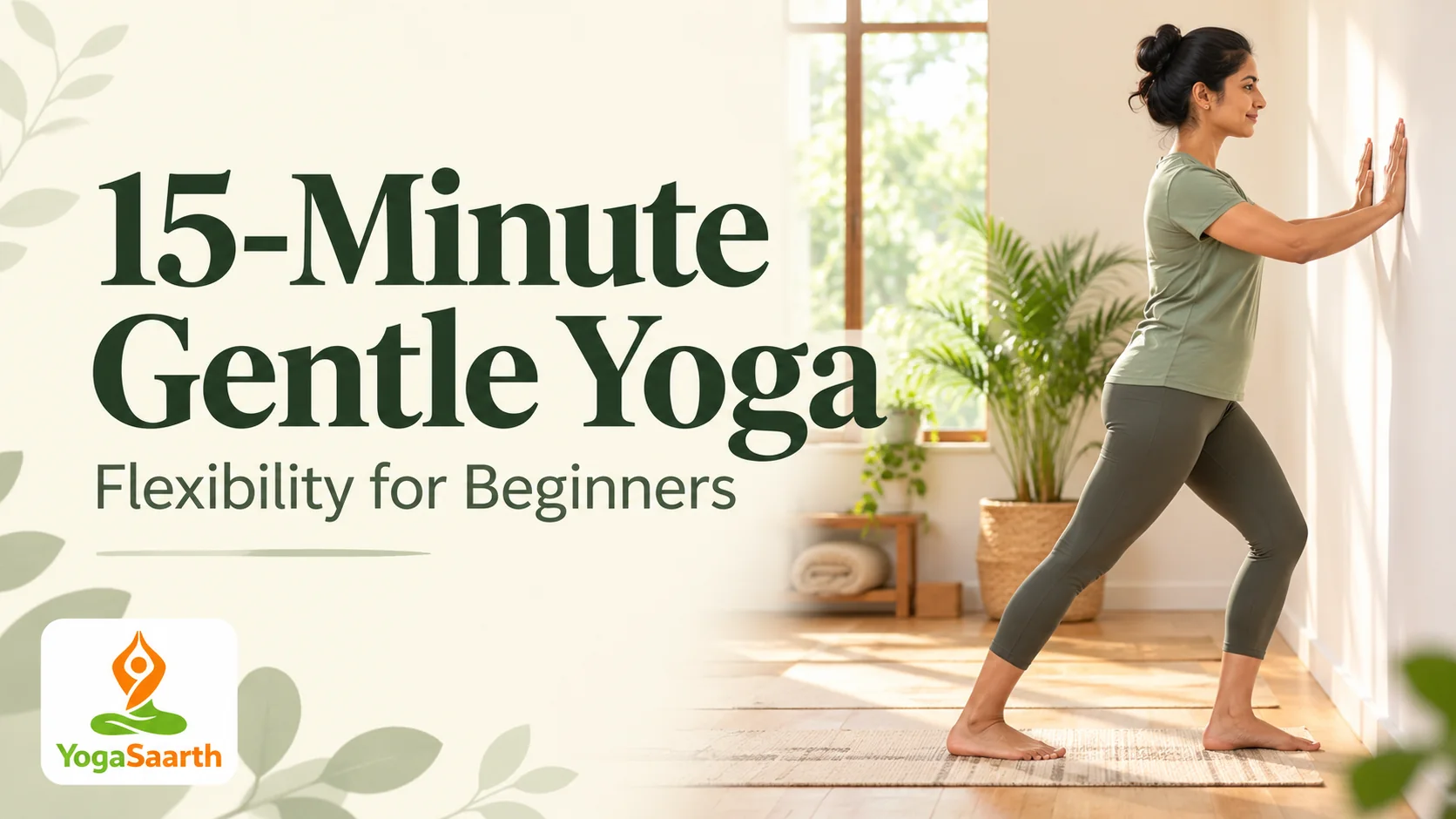
Face a wall and place your hands against it. Step one foot back a comfortable distance while bending the front knee slightly. Keep the rear heel down if possible and both feet pointing roughly forward. You should feel a mild stretch, not strain. Release and switch legs. Repeat gently with rests. Reduce the step length if the position feels too strong.
5. Chair-supported hip hinge — 2 minutes
Stand facing the back of a stable chair secured against a wall. Place your hands on it, soften your knees and move your hips back a little while keeping your spine comfortably long. Stop well before the point where you need to round or pull. Rise slowly. For a seated option, sit toward the front of the chair and make a very small forward hinge with your hands on your thighs. Skip forward bending if it is restricted for your condition.
6. Gentle cat–cow — 2 minutes
Seated on the chair, place your hands on your thighs. Gently lift through the chest on an inhale and soften into a small upper-back rounding on an exhale. Avoid tipping your head far back. If you comfortably use a mat, you may practise a small version on hands and knees with padding under the knees. Stay seated if wrists or knees object. Keep a neutral spine instead if spinal bending is unsuitable for you.
7. Supported rest — 2 minutes
Sit with your back supported, feet resting securely and hands relaxed. Alternatively, lie comfortably on a mat with knees bent if that position suits you and you can get up safely. Let breathing settle without controlling it. Finish slowly and notice whether any movement needs adjusting next time.
What progress looks like
Early progress may mean learning where to stop or finding a more comfortable modification. It need not mean a deeper stretch. Repeat an easy version consistently and change only one thing at a time, such as adding a comfortable repetition. Avoid promises about becoming flexible within a fixed number of days.
NHS guidance encourages gradual progression with gentle flexibility work. NCCIH describes potential wellness benefits of yoga, but research on different programmes does not validate this exact sequence. This routine is an editorial practice suggestion, not rehabilitation or a treatment for joint or back pain.
Common mistakes to avoid
- Holding your breath to reach farther: back off until you can breathe normally.
- Locking the knees or forcing the spine: soften the joints and reduce the range.
- Treating soreness as a goal: a comfortable practice is the aim.
- Using an unstable support: check the chair and floor before starting.
Frequently asked questions
Can I start if I am very stiff?
Yes, if these movements are appropriate for your health. Begin with the warm-up and a few small movements. Stiffness does not mean you should force a stretch.
Do I need to practise on the floor?
No. The seated options allow you to avoid floor transitions. Try our 10-minute chair yoga routine for a fully seated session.
How often should I practise?
Choose a schedule that allows comfortable recovery. NHS flexibility guidance suggests at least twice weekly for its exercise programme; your own needs may differ. Persistent pain needs individual advice.
Should I hold every stretch for two minutes?
No. The two-minute sections include moving into position, brief comfortable stretches, releasing, changing sides and resting. You can shorten any section.
Sources and further reading
For another practice option, explore our morning yoga guide for beginners. Learn about Yoga Saarth online yoga classes if you would like guidance choosing suitable variations.