A short morning yoga routine can help you ease into movement after waking. This morning yoga for beginners sequence combines ten simple poses with comfortable breathing. It is designed as a gentle introduction, with options to adapt each movement.
What morning yoga can—and cannot—do
According to the US National Center for Complementary and Integrative Health (NCCIH), yoga may support general wellness, stress management, balance and sleep. Benefits vary, and research on yoga programmes does not establish that this particular ten-minute routine will produce a specific result. Morning practice is a convenient habit, rather than a uniquely proven time to practise.
Before you begin
Use a non-slip mat and keep a chair or wall nearby. Move slowly, breathe normally and stay within a comfortable range. Stop for sharp pain, dizziness, tingling or unusual breathlessness. If you are pregnant, recovering from surgery, or have an injury or health condition, ask your healthcare professional and a qualified yoga teacher about suitable modifications. Avoid forcing stretches or holding your breath.
A gentle 10-minute morning yoga routine
The timings below total ten minutes, including about one minute for transitions. Spend less time in any position that feels uncomfortable.
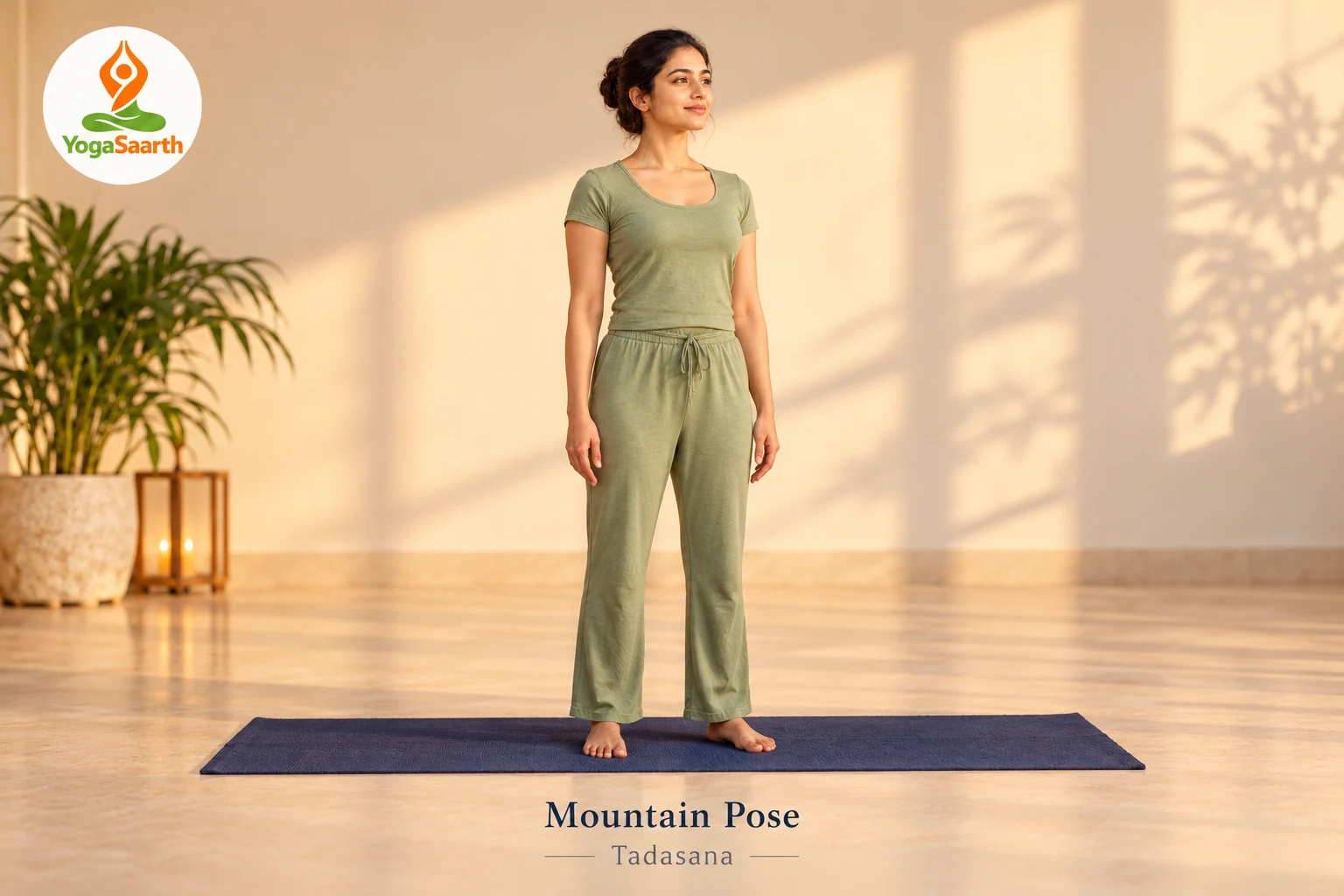
1. Mountain Pose (Tadasana) — 45 seconds
Stand with feet about hip-width apart and knees relaxed. Let your arms rest by your sides. Distribute your weight comfortably across both feet and take a few easy breaths. Use a wall or chair for balance if needed.
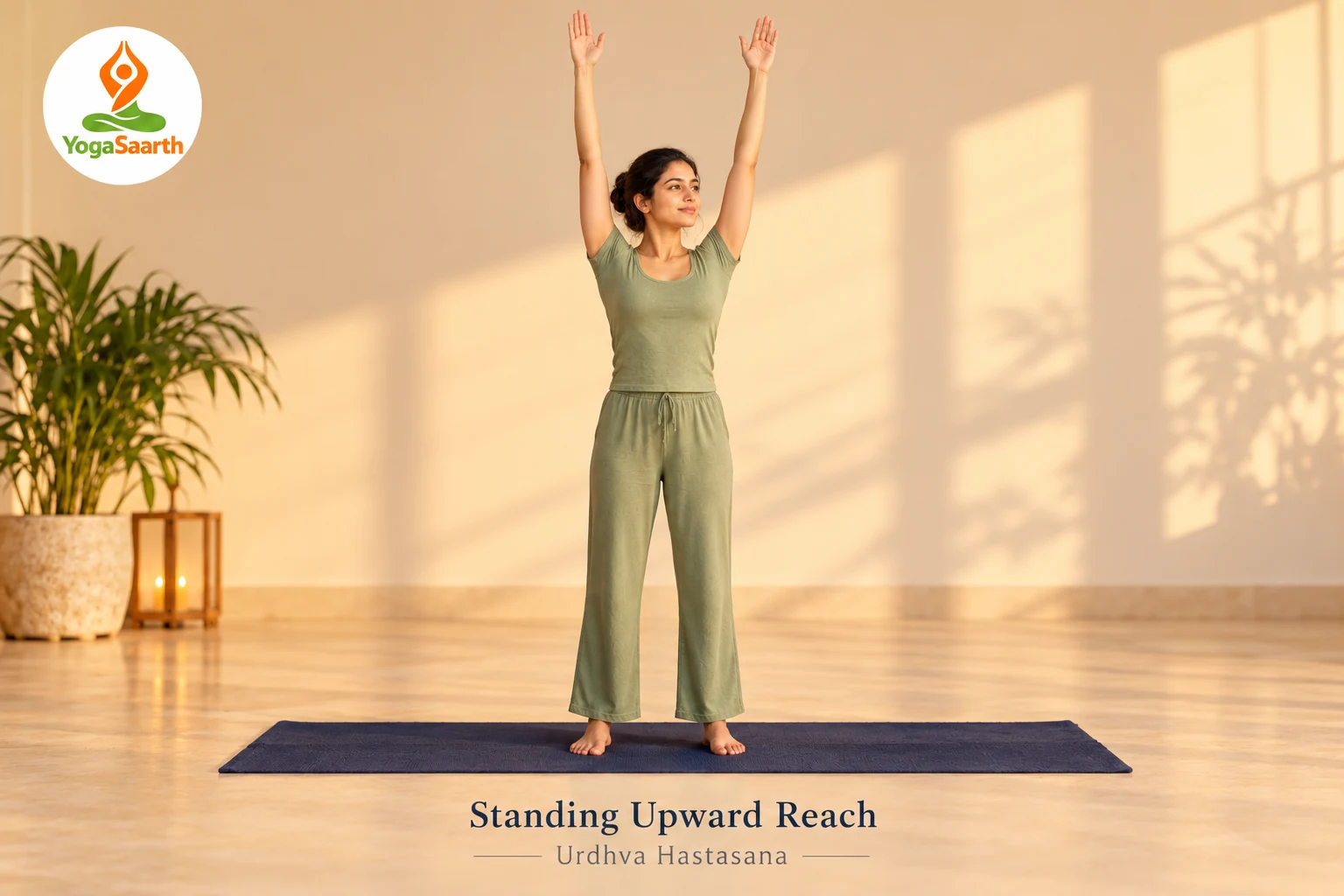
2. Standing Upward Reach (Urdhva Hastasana) — 30 seconds
From standing, gently raise your arms as far as your shoulders allow. Keep your ribs relaxed and avoid leaning back. Lower your arms if reaching overhead causes discomfort.
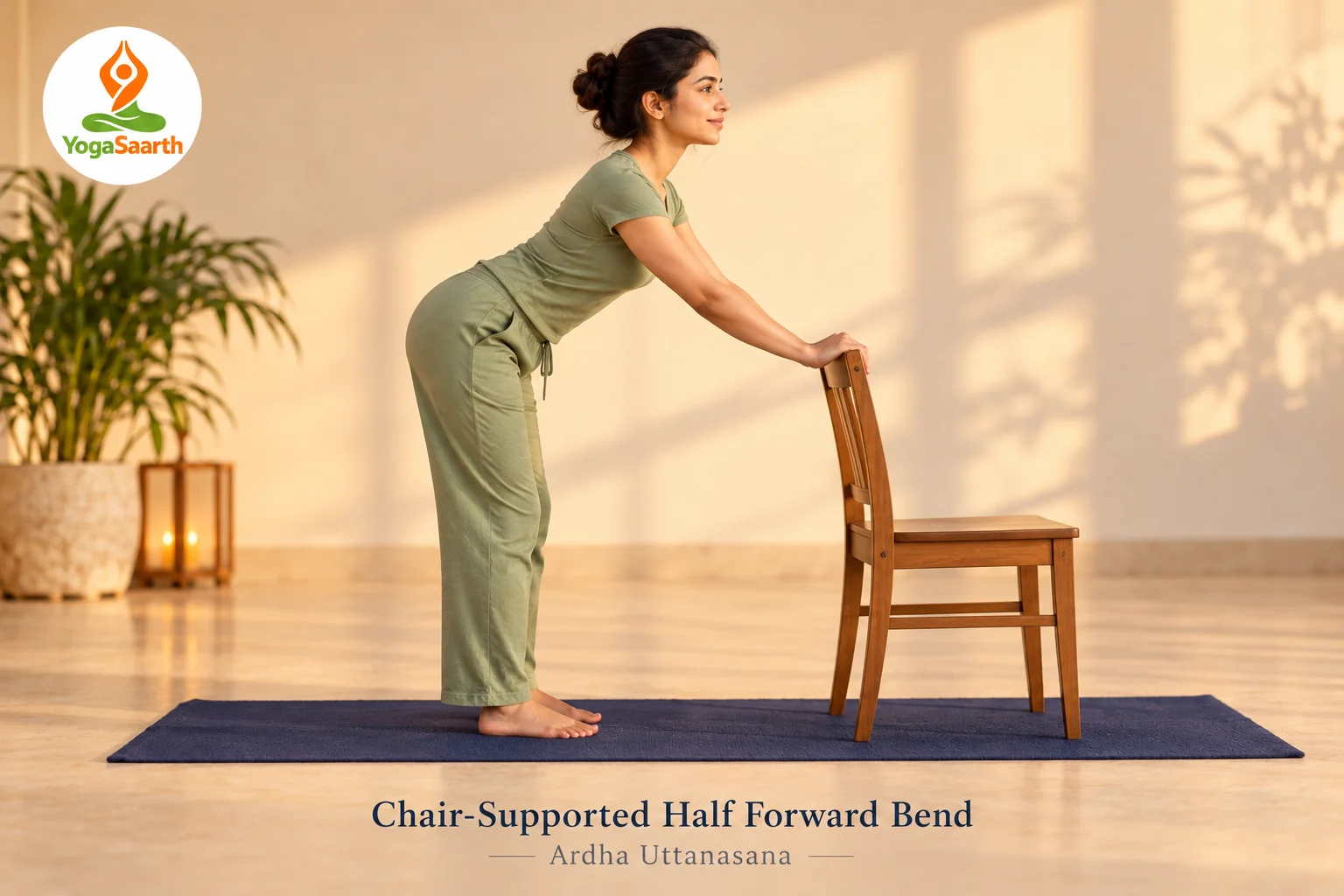
3. Standing Half Forward Bend (Ardha Uttanasana), chair-supported — 45 seconds
Place your hands on the back of a stable chair. Soften your knees and hinge at your hips, keeping your back comfortably long. Stay higher if your hamstrings feel tight. Return upright slowly.
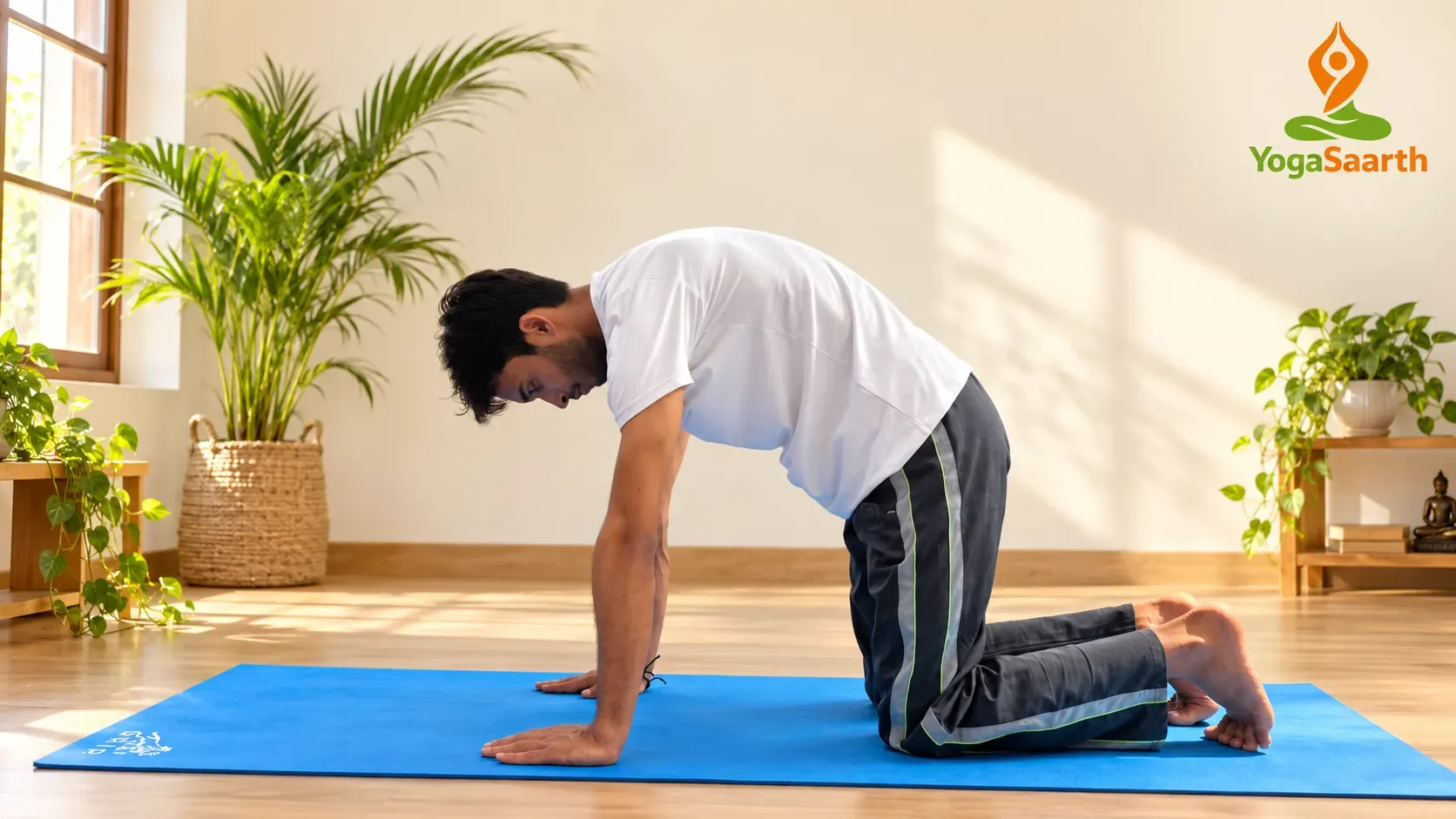
4. Cat Pose (Marjaryasana) — 30 seconds
Come onto hands and knees, with hands under shoulders and knees under hips. As you exhale, gently round your back without forcing your neck. Add a folded blanket under your knees, or do this seated with hands on your thighs.
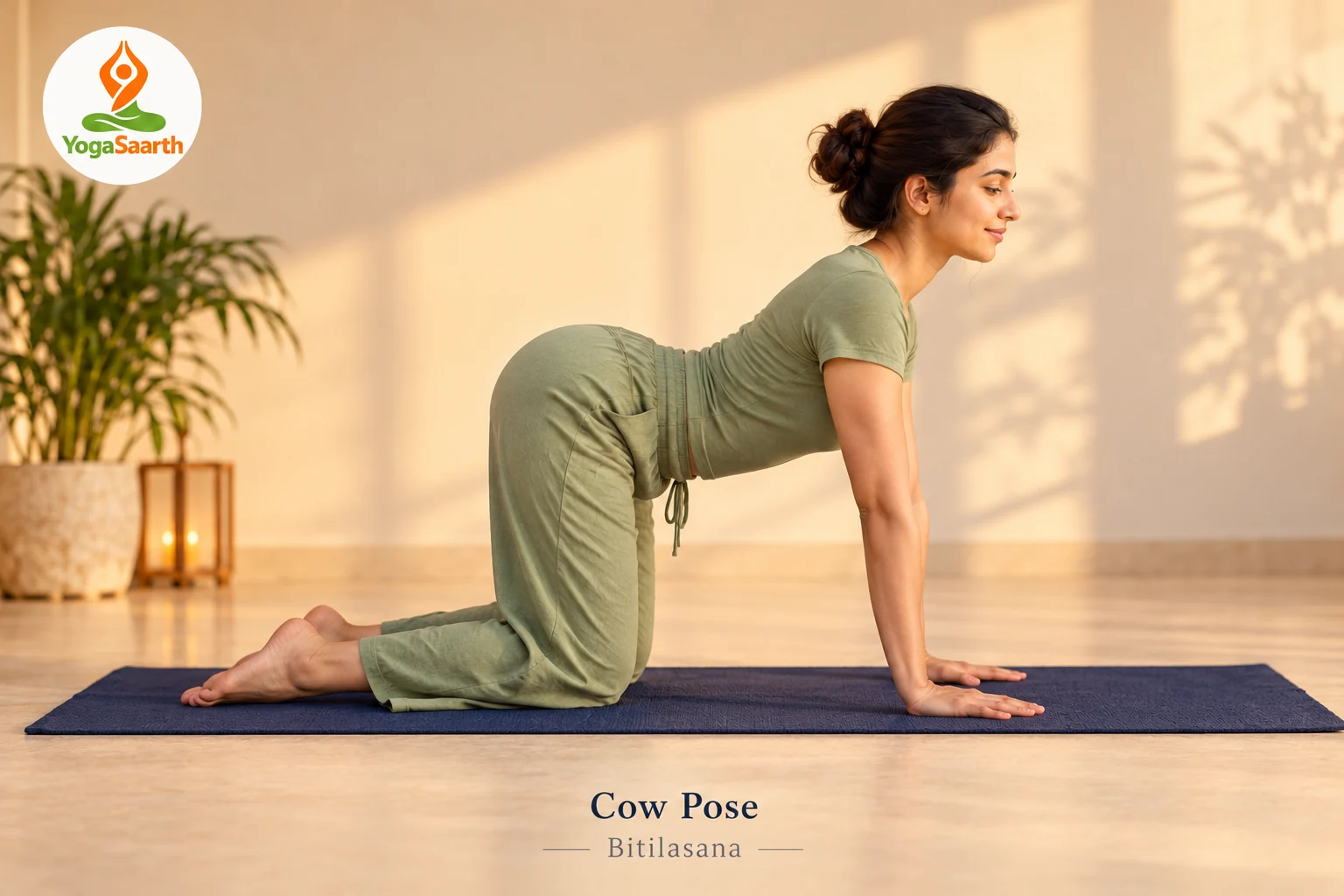
5. Cow Pose (Bitilasana) — 30 seconds
From the same position, inhale and gently let your chest move forward while your back forms a small, comfortable arch. Keep your gaze slightly forward and down. Alternate Cat and Cow slowly rather than holding either shape rigidly.
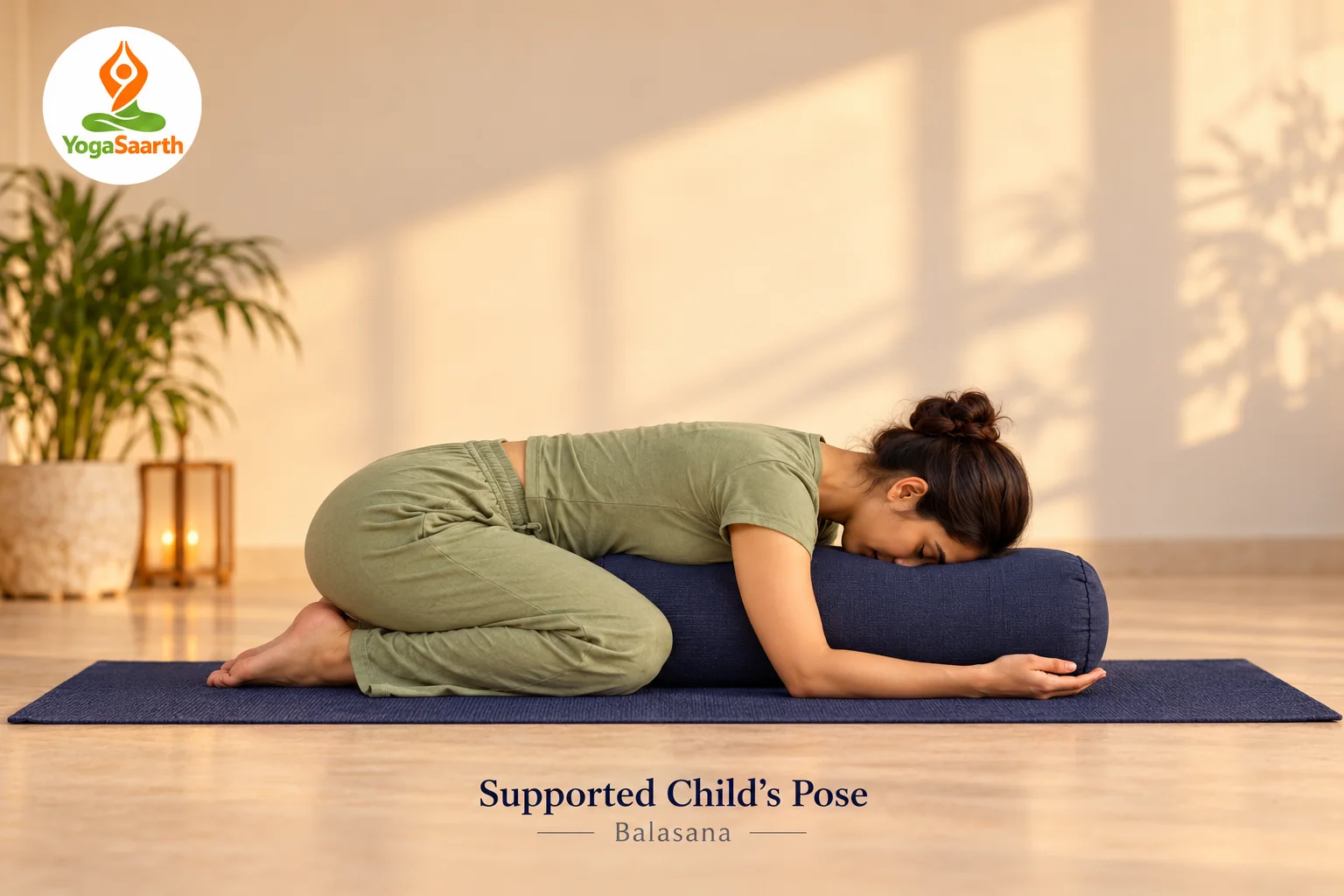
6. Child’s Pose (Balasana), supported — 60 seconds
From kneeling, ease your hips back only as far as your knees allow. Rest your torso and forehead on cushions if helpful. Skip this pose if it irritates your knees or ankles; sit in a chair instead.
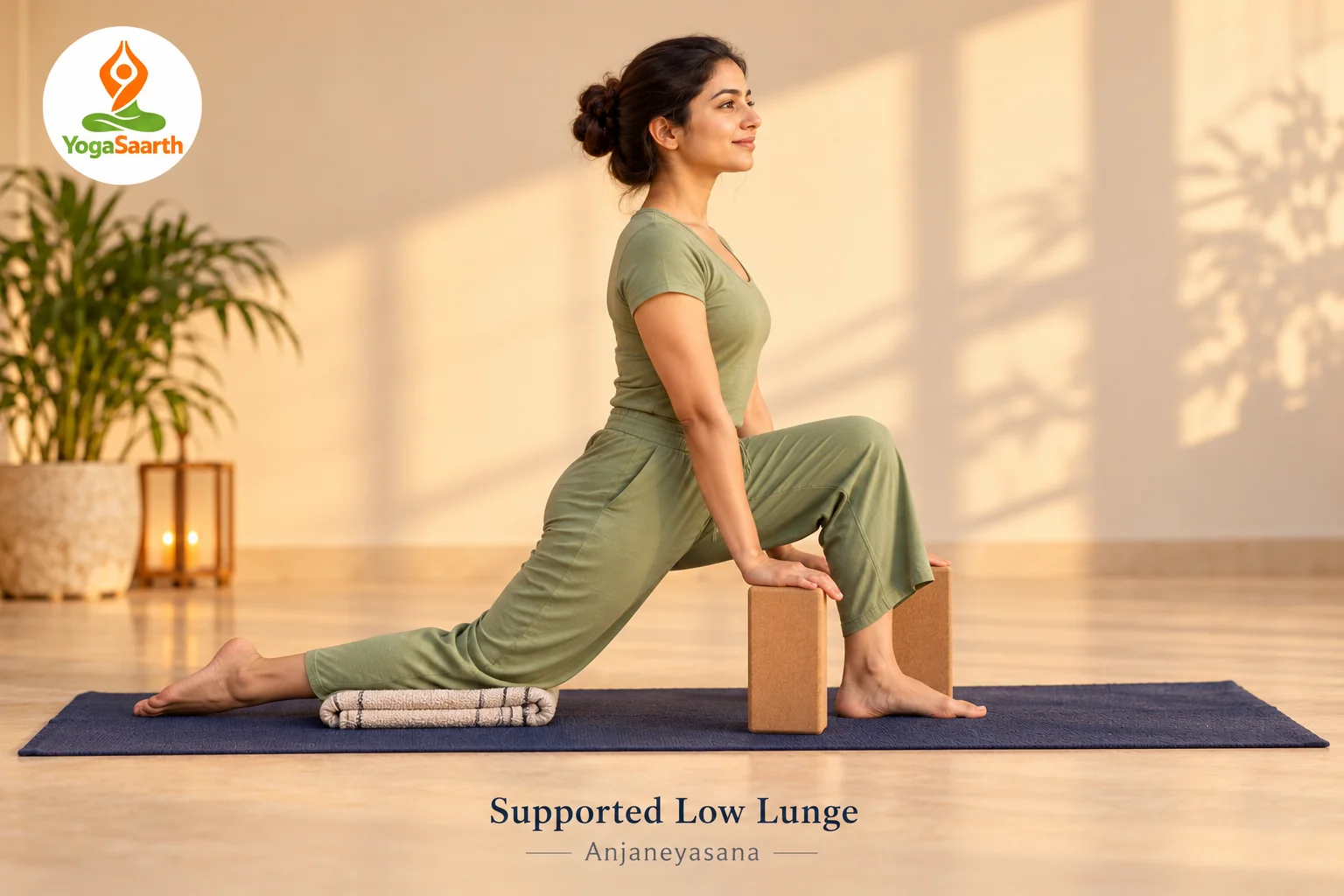
7. Low Lunge (Anjaneyasana), hands supported — 45 seconds per side
Step one foot forward with the back knee on a padded mat. Keep your front knee comfortably over the ankle and rest your hands on a stable chair or blocks. Shift forward slightly without arching your lower back. Use a short standing split stance if kneeling is uncomfortable.
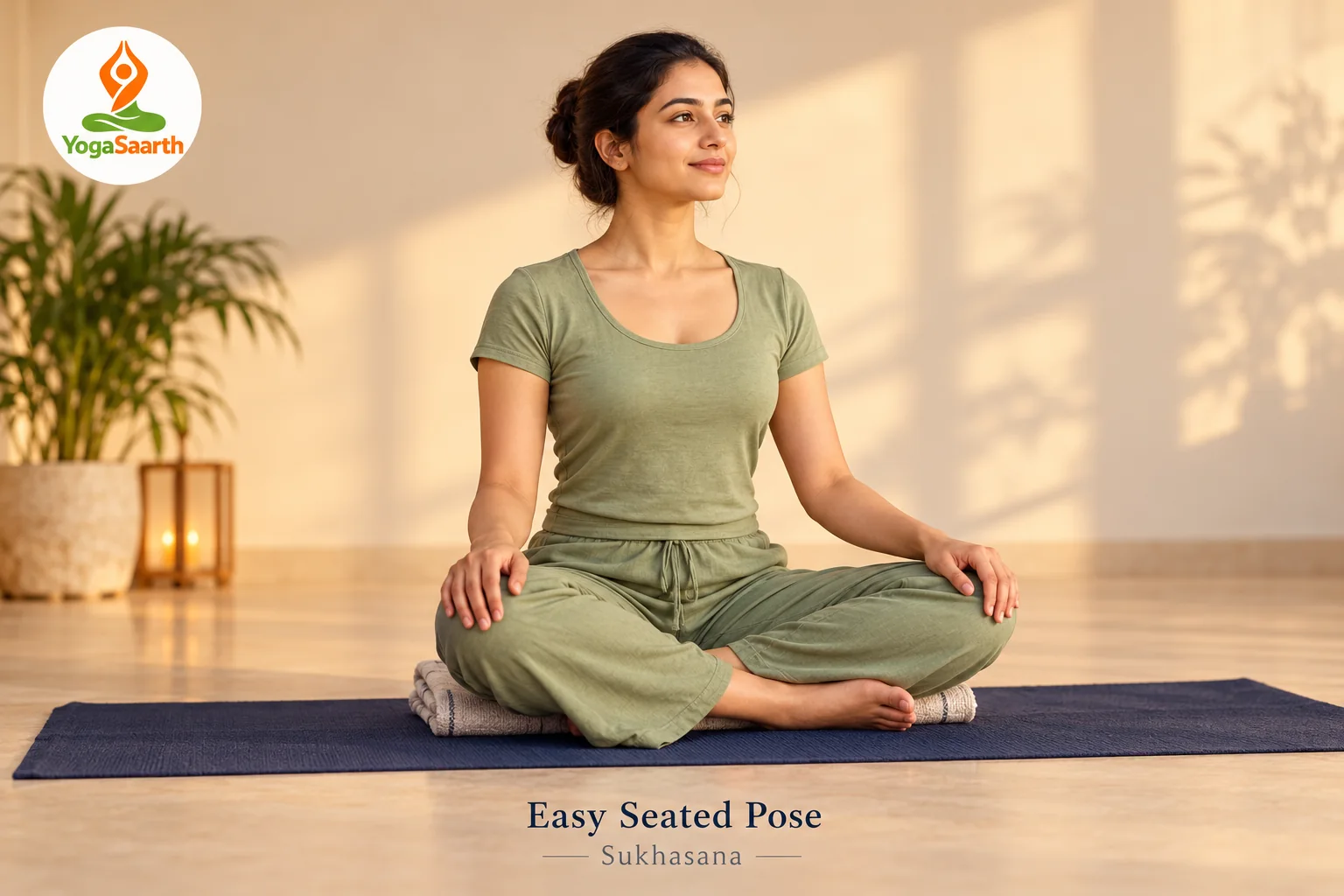
8. Easy Seated Pose (Sukhasana) — 60 seconds
Sit on a folded blanket with legs comfortably crossed, or sit on a chair with feet on the floor. Let your shoulders soften. Keep your breathing easy; there is no need to sit perfectly upright or force your knees down.
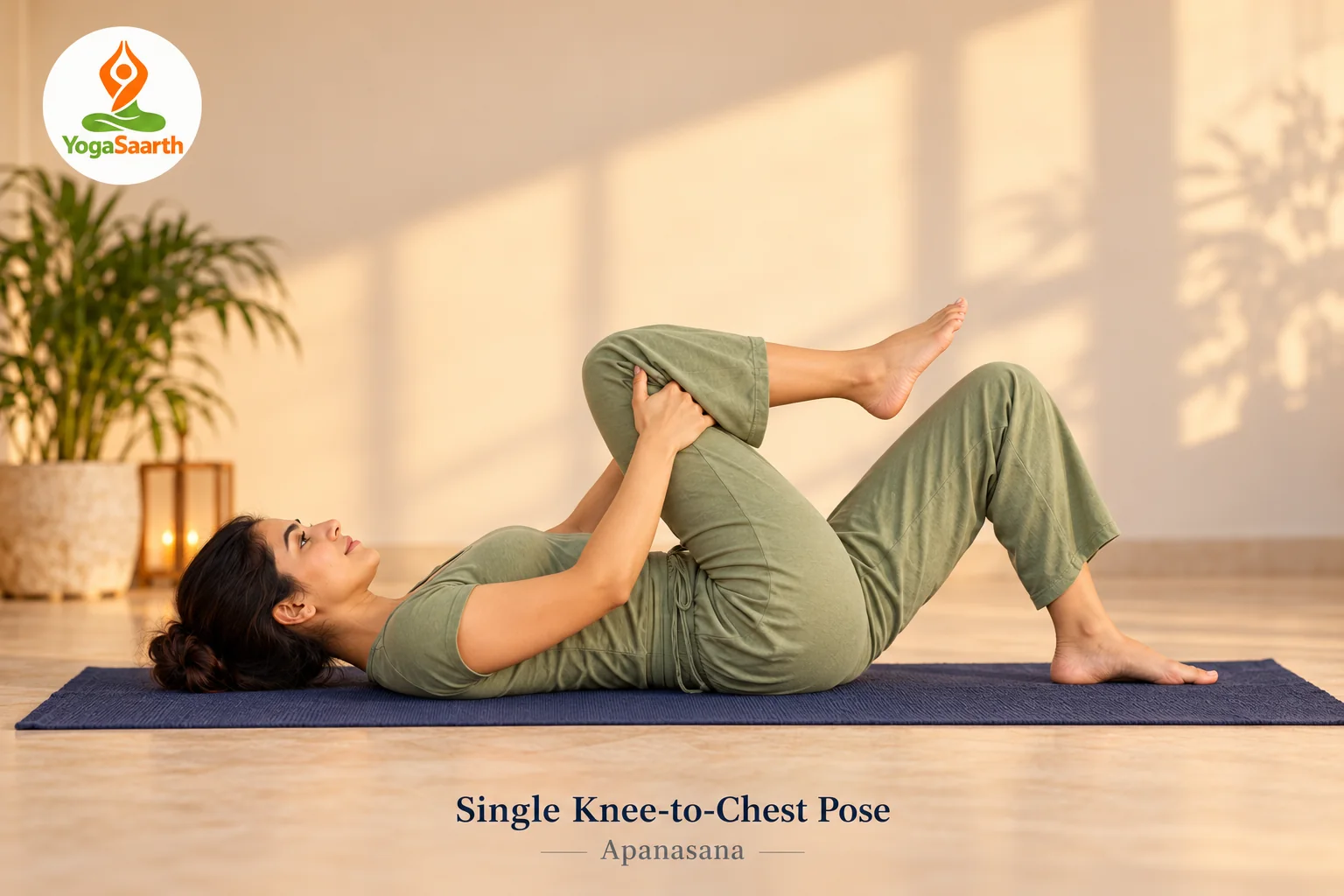
9. Knees-to-Chest Pose (Apanasana), gentle variation — 60 seconds
Lie on your back and draw one or both knees toward your torso without compressing your abdomen. Hold behind the thighs if reaching the shins feels awkward. Keep your head resting down. If lying on your back is unsuitable, remain seated.
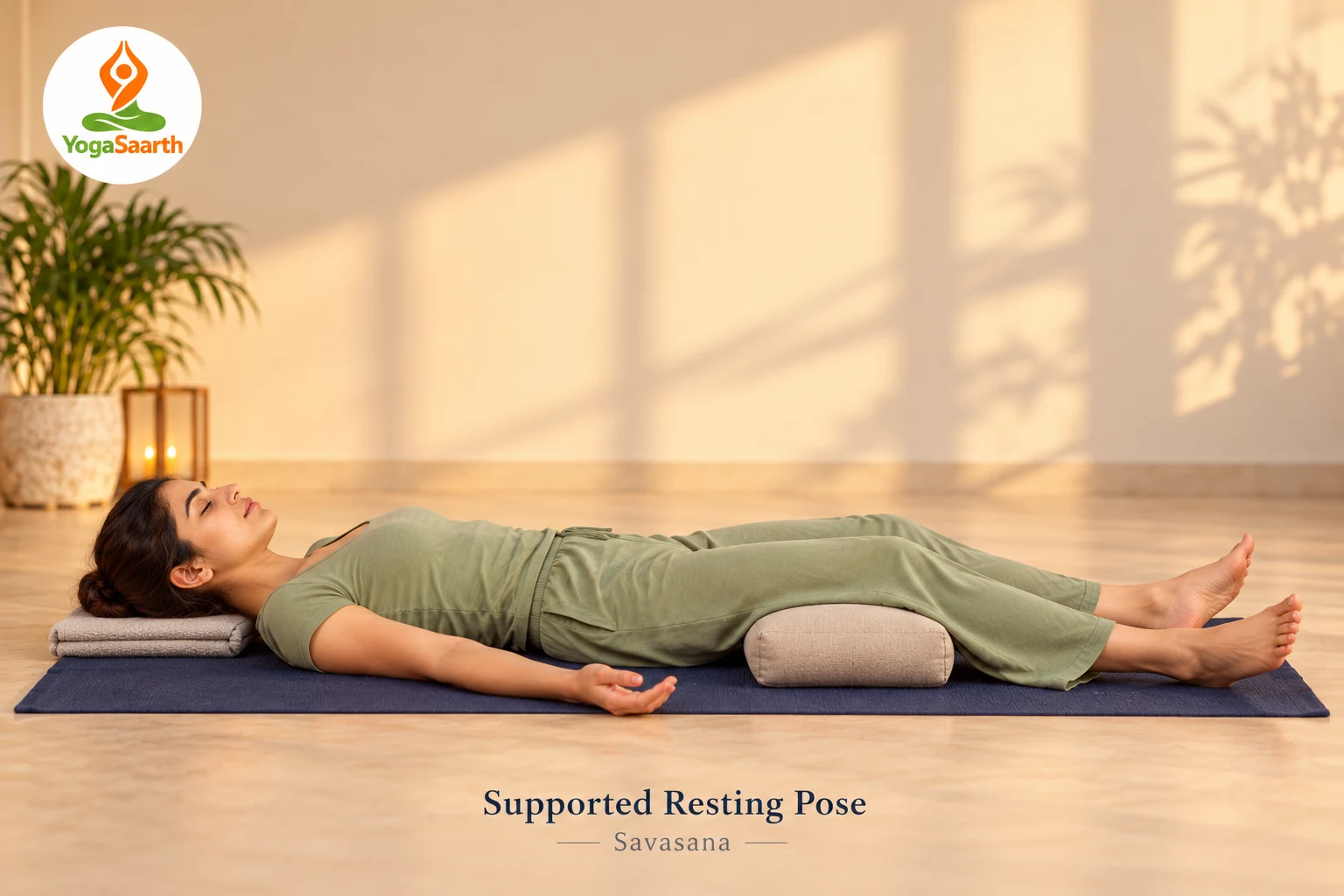
10. Resting Pose (Savasana) — 90 seconds
Rest on your back with a cushion under your knees, or on your side with support. Let your breathing settle naturally. Roll onto your side before coming up slowly.
How to build a realistic morning habit
Start with a few comfortable minutes and increase gradually. A consistent, manageable practice is more useful than forcing every pose. For a longer beginner session, explore our 15-minute daily yoga routine for beginners at home. For individual guidance, see YogaSaarth online yoga classes.
Frequently asked questions
Is ten minutes of morning yoga enough?
Ten minutes can be a practical starting point for gentle movement. It does not replace all the aerobic and strengthening activity you may need across the week.
Should I practise on an empty stomach?
Choose a time when you feel comfortable. Avoid practising immediately after a large meal, and adjust the timing to your digestion, health needs and daily schedule.
Do I need to touch my toes?
No. Bend your knees, use support and reduce the range of movement. Comfort and steady breathing matter more than reaching a particular shape.
Sources and editorial note
Health claims checked against NCCIH: Yoga—Effectiveness and Safety. Reviewed 24 October 2026. This routine is general educational guidance, not a personalised treatment plan or a clinically tested protocol.