Beginner
5-Minute Breathing Exercise for Beginners: A Gentle Daily Pause
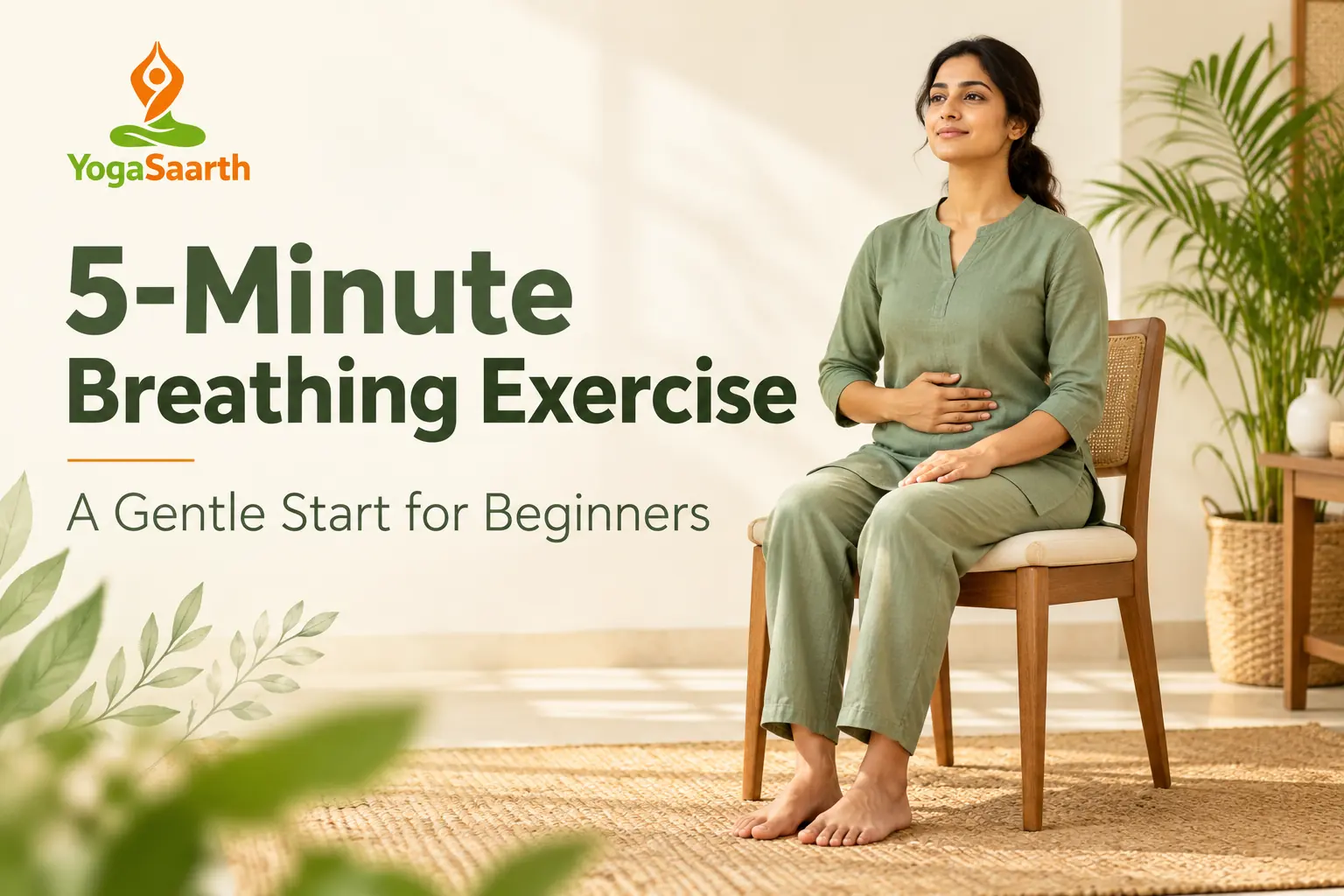
A five-minute breathing exercise gives you a simple place to begin when you want a quieter pause in your day. There is no special equipment, complicated sequence or target breath size to achieve. You can practise sitting in a comfortable chair, with your eyes open and your feet supported. This beginner guide introduces gentle breathing and attention. It is separate from forceful pranayama or breath-retention practices. The aim is to find a comfortable rhythm, not to take the biggest possible breath or make your mind completely silent. What gentle breathing may help with The NHS includes a gentle breathing exercise among its self-help tools for stress. Some people find a brief practice calming, while others prefer movement or an external focus. Responses vary, and a short exercise is not a treatment for an anxiety disorder or a replacement for professional care. In yoga, attention to breathing can accompany movement or become a practice of its own. If you would like to combine awareness with easy movement, try our 8-minute mindful yoga practice . Set up a comfortable space Choose a time when you can pause safely, such as after finishing a task or before beginning your usual yoga practice. Do not do an inward-focused exercise while driving, swimming or operating equipment. Sit in a stable chair with your back supported and your feet resting comfortably on the floor or a firm foot support. Let your hands rest on your thighs. You may place one hand lightly on your abdomen if that helps you notice movement. Loosen restrictive clothing where practical. Allow your shoulders and jaw to soften. Set a quiet five-minute timer if helpful. Keep your eyes open or softly lowered if closing them feels uncomfortable. A simple five-minute breathing exercise Minute 1: Arrive without changing your breath Notice the support of the chair and the contact beneath your feet. Let your hands settle. Observe a few ordinary breaths without making them slower or deeper. You may notice movement around your ribs or abdomen, or the sensation of air at your nose. Choose whichever is easiest to notice. Minutes 2–4: Let breathing become gentle and regular Allow a comfortable breath in through your nose, followed by an easy breath out through your mouth. Avoid pulling air in strongly or pushing it out. Let each breath flow into the next without deliberately holding it. If counting feels helpful, try a short, easy count on the inhale and exhale. Use only a count you can manage comfortably; reaching five is optional. Drop the counting whenever it creates effort, air hunger or distraction. Your breathing should remain easy rather than becoming a performance. When your mind wanders, notice that it has wandered and return to the next comfortable breath. You do not need to restart the timer. If you need a break, return to your usual breathing and look around the room. Minute 5: Release the count and finish Let go of any deliberate rhythm. Feel the chair, notice a few sounds and allow your attention to widen. Move your fingers and feet gently before standing. Ask yourself whether this version felt comfortable; feeling dramatically different is not required. Make the practice fit you Five minutes is a suggested window, not an obligation. Begin with a shorter pause if that suits you, and build familiarity before extending it. You can also spend the whole session simply observing ordinary breathing. If focusing inside your body makes you more anxious, stop the exercise. Try noticing objects or sounds around you instead. If you have a respiratory or heart condition, recurrent dizziness or another relevant health concern, ask your healthcare professional whether a breathing practice is suitable and follow any existing care plan. Stop if you become light-headed, uncomfortable or unusually breathless. Resume ordinary breathing. New or severe breathing difficulty or chest pain needs urgent medical attention rather than another round of breathing exercises. Common beginner mistakes Taking oversized breaths: keep the breath comfortable instead of repeatedly filling your lungs as much as possible. Competing with a timer: finish early whenever you need to. Consistency should not come at the cost of comfort. Adding breath holds: this exercise does not include retention or rapid breathing. Judging every thought: wandering attention is an opportunity to return gently, not evidence that you have failed. Where it fits in a yoga routine Try this pause on its own or before an easy practice. For a movement-based wind-down, explore our 10-minute evening yoga routine . Choose the option that feels most approachable on the day. For guidance with a wider beginner practice, explore Yoga Saarth online yoga classes . Tell the instructor about your experience and any relevant limitations so you can discuss suitable options. Frequently asked questions Do I have to breathe to a count of five? No. Use a shorter comfortable count or no count at all. Never stretch a breath to meet a number. Is this the same as advanced pranayama? No. This is a gentle introductory exercise with no breath retention or forceful breathing. More demanding techniques need appropriate instruction and may not suit everyone. Can I practise with my eyes open? Yes. Rest your gaze on a comfortable point. Closing your eyes is optional. What if I do not feel calmer? That can happen. Do not force a result or keep extending the session. Another activity may suit you better. Seek professional support when stress or anxiety persists or affects daily life. Source and editorial note Reviewed 26 October 2026. General educational information, not personalised medical advice. The five-minute structure, reflection prompts and habit suggestions are editorial guidance, not a clinically tested programme. NHS: Breathing exercises for stress — comfortable positioning, gentle breathing and optional counting. NCCIH: Yoga effectiveness and safety — beginner precautions, including avoiding forceful breathing.