Beginner
Yoga for Better Sleep: 8 Relaxing Poses Before Bed
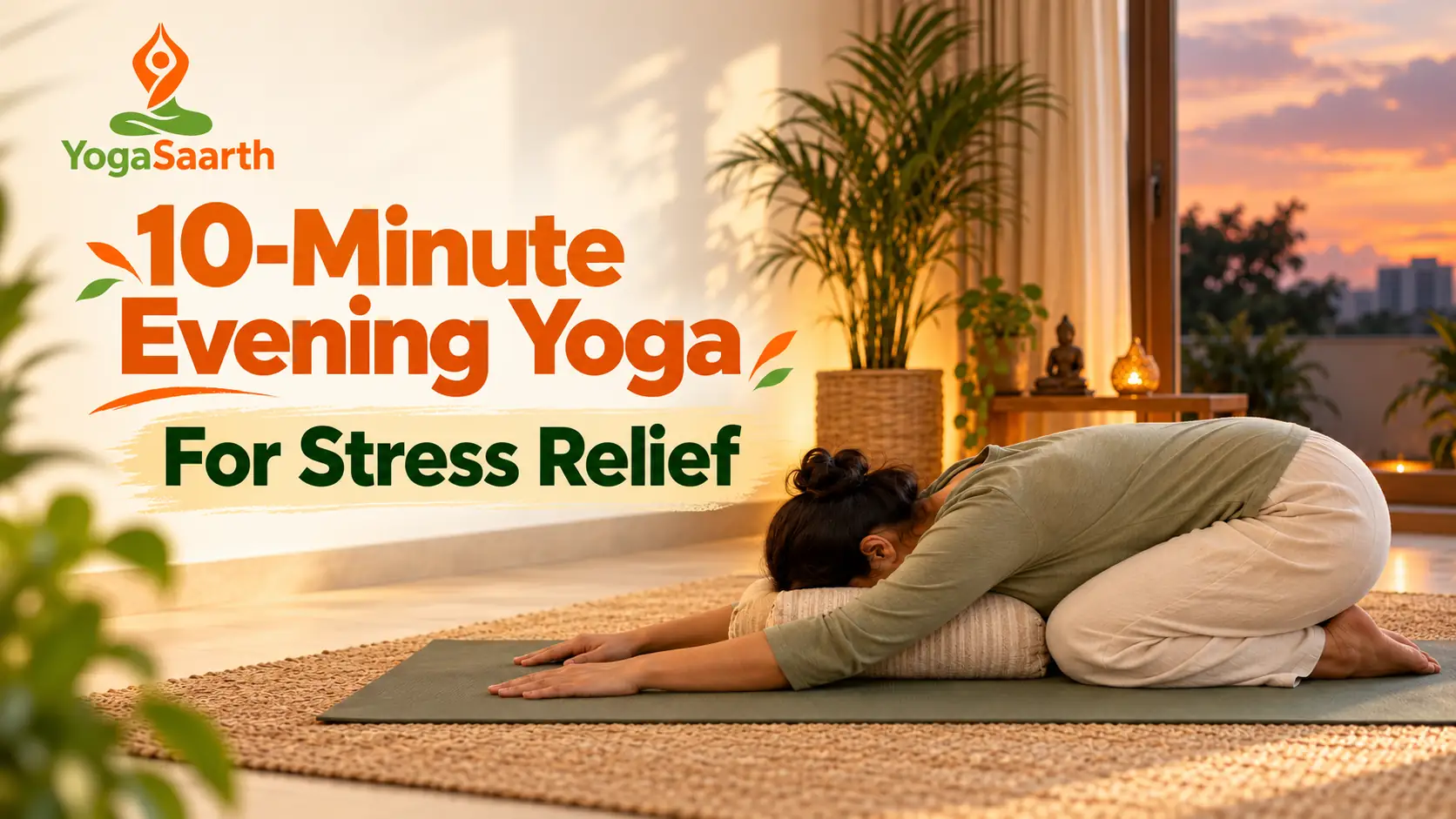
Yoga for better sleep can be a gentle way to wind down before bed. These eight relaxing poses use slow movement and support rather than demanding stretches. Try the sequence on a mat in a quiet space and choose only the positions that feel comfortable. Does yoga help you sleep? NCCIH reports that yoga has improved sleep in studies involving some groups, including older adults and women with sleep problems. Results vary across populations and programmes. This does not prove that any single pose, or this specific bedtime routine, treats insomnia. Think of gentle yoga as an optional relaxation habit. For long-term insomnia, the US National Heart, Lung, and Blood Institute identifies cognitive behavioural therapy for insomnia (CBT-I) as the usual first treatment option. Yoga should not replace an assessment or prescribed treatment. Set up a comfortable bedtime practice Keep a folded blanket, cushions and a stable chair nearby. Practise on a non-slip surface, with enough light to move safely. Breathe normally without breath retention. Avoid forcing a stretch or practising immediately after a large meal. If a pose increases alertness or discomfort, skip it. Ask a healthcare professional and qualified yoga teacher about modifications if you are pregnant, have an injury, recent surgery or a health condition. Stop for sharp pain, dizziness, numbness or unusual breathlessness. Choose a supported seated or side-lying rest whenever floor positions are unsuitable. 8 relaxing yoga poses before bed Allow about 12 minutes: the suggested holds total roughly 11 minutes, leaving a minute for transitions. These timings are optional, not a therapeutic dose. 1. Easy Seated Pose (Sukhasana) — 1 minute Sit on a folded blanket with legs comfortably crossed, or use a chair with feet resting on the floor. Let your hands rest on your thighs and release unnecessary shoulder tension. Notice your natural breathing without trying to make it unusually deep. Easy Seated Pose (Sukhasana) 2. Child’s Pose (Balasana), supported — 1 minute From kneeling, ease your hips back within a comfortable range. Support your chest and forehead with cushions, leaving room to breathe freely. Skip this pose if your knees or ankles hurt; rest seated with your forearms on a table instead. Supported Child’s Pose (Balasana) 3. Seated Forward Bend (Paschimottanasana), gentle variation — 1 minute Sit with your knees bent and a cushion over your thighs. Hinge forward slightly from the hips and rest your arms comfortably. There is no need to reach your toes or fold deeply. If forward bending aggravates your back, stay upright in a chair. Gentle Seated Forward Bend (Paschimottanasana) 4. Knees-to-Chest Pose (Apanasana), one leg at a time — 1 minute Lie on your back with both knees bent. Draw one knee toward you gently, holding behind the thigh, then change sides after about 30 seconds. Avoid pulling hard or compressing your abdomen. Remain seated if lying on your back is unsuitable. Single Knee-to-Chest Pose (Apanasana) 5. Reclining Bound Angle Pose (Supta Baddha Konasana), supported — 1 minute Lie back with your knees bent and let them open only slightly, bringing the soles of your feet toward each other. Place cushions under both thighs so the legs are supported. Keep your feet apart and knees pointing upward instead if your hips or groin feel strained. Supported Reclining Bound Angle (Supta Baddha Konasana) 6. Supine Spinal Twist (Supta Matsyendrasana), small-range variation — 1 minute each side With knees bent and feet on the floor, let your knees drift a little to one side. Support them on a cushion and keep the movement small. Keep your head neutral and do not force your shoulders down. Return to centre slowly and repeat on the other side. Skip twisting if it causes back pain. Gentle Supine Spinal Twist (Supta Matsyendrasana) 7. Legs-Up-the-Wall Pose (Viparita Karani), supported variation — 2 minutes Rest on your back with your lower legs supported on the seat of a stable chair. This is an alternative to placing straight legs against a wall; keep your head and back on the mat. If you have been advised to avoid inverted positions or lying flat, choose seated rest and ask your clinician about suitable alternatives. Legs Supported on a Chair (Viparita Karani Variation) 8. Resting Pose (Savasana) — 2 minutes Rest on your back with a pillow under your knees, or lie on your side with a pillow between your knees. Let your breathing return to its natural rhythm. Keep your eyes open if that feels more comfortable. Roll onto your side and rise slowly when finished. Supported Resting Pose (Savasana) Make the routine part of healthy sleep habits Keep a consistent wake-up and bedtime schedule, make your room quiet and dark, and limit bright screens close to bedtime. Avoid caffeine and nicotine near bedtime. Alcohol can disrupt sleep even if it initially makes you drowsy. If your sleep problems persist, affect daily functioning, or involve loud snoring or gasping, seek medical advice. For a broader evening practice, explore our 10-minute evening yoga for stress relief . If you want guidance on adapting movements, see YogaSaarth online yoga classes . Frequently asked questions How close to bedtime should I practise yoga? Try gentle practice during your wind-down period and adjust it to how you feel. There is no single proven interval for everyone. Move vigorous sessions earlier if they make it harder for you to settle. Will these poses cure insomnia? No cure can be promised. Yoga may help some people relax or improve sleep quality, but ongoing insomnia needs appropriate assessment and treatment. Must I do all eight poses? No. A few comfortable positions may suit you better. Skip anything painful and never force yourself to complete the sequence. Sources and editorial note Health claims checked against NCCIH: Yoga—Effectiveness and Safety , NCCIH: Mind and Body Practices for Sleep Disorders , and NHLBI: Insomnia Treatment . Reviewed 24 October 2026. This sequence is general educational guidance, not a personalised treatment plan or a clinically tested protocol.